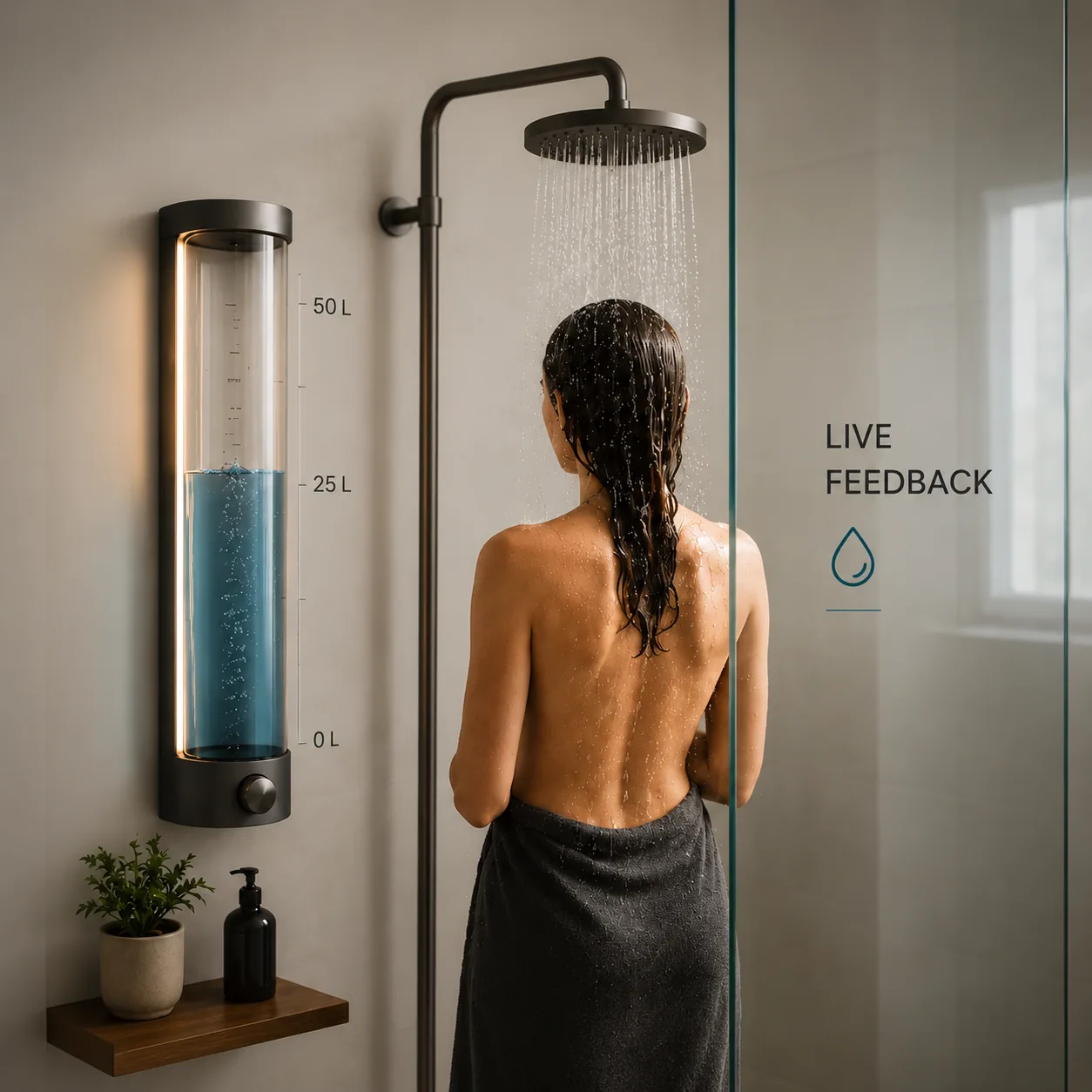
Starting point
The question was not: how do we make people use less water?
Most water-saving products begin with behaviour: timers, warnings, targets, apps or reminders.
The I·V·O Design Prompt started somewhere else.
Reframe
What would have to be true for someone to experience water as a limited resource while they are using it?
That changed the design problem.
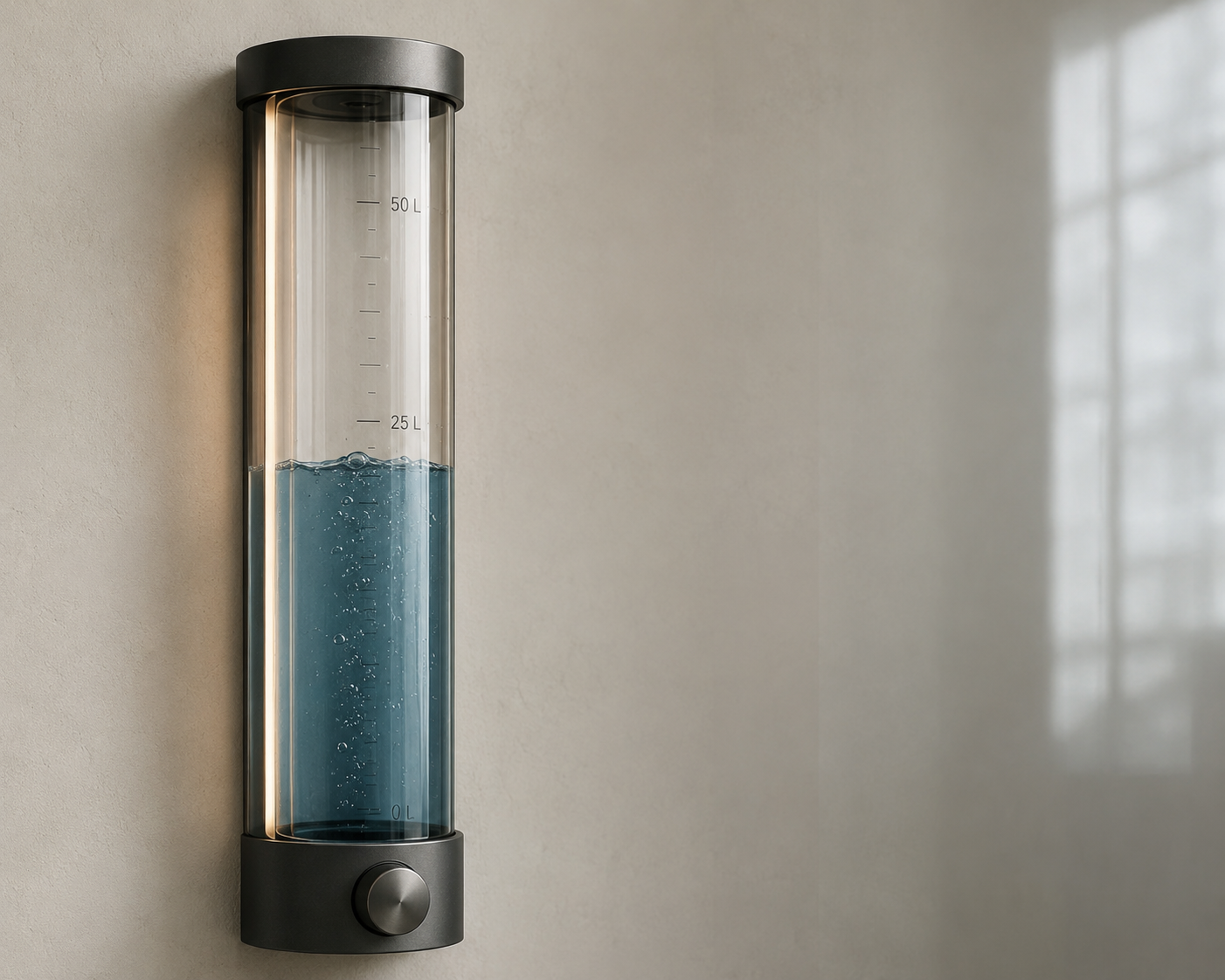
Design response
Instead of another screen showing consumption afterwards, the resource itself became visible at the point of use.
The result is the Water Feedback System: a physical column beside the shower that shows the available water and changes while you use it.
No score.
No alarm.
No instruction to stop.
You see the state change and decide what to do.
The design shift
- Hidden consumption
- Visible state
- Delayed information
- Immediate feedback
- Behaviour correction
- Informed choice
- Digital dashboard
- Physical presence
What changed
The point is not the water column itself.
A different starting condition produced a different object.