Bring me the situation.
We decide what it needs.
I work with organisations, designers, teams and public systems where the problem is not simply a lack of ideas, but difficulty seeing what is shaping the situation.
Using I·V·O, I can analyse the existing system, make its structure visible and — where useful — translate that understanding into a design direction.
You do not need to know which service you need before we start.

From seeing the system
to changing its conditions.
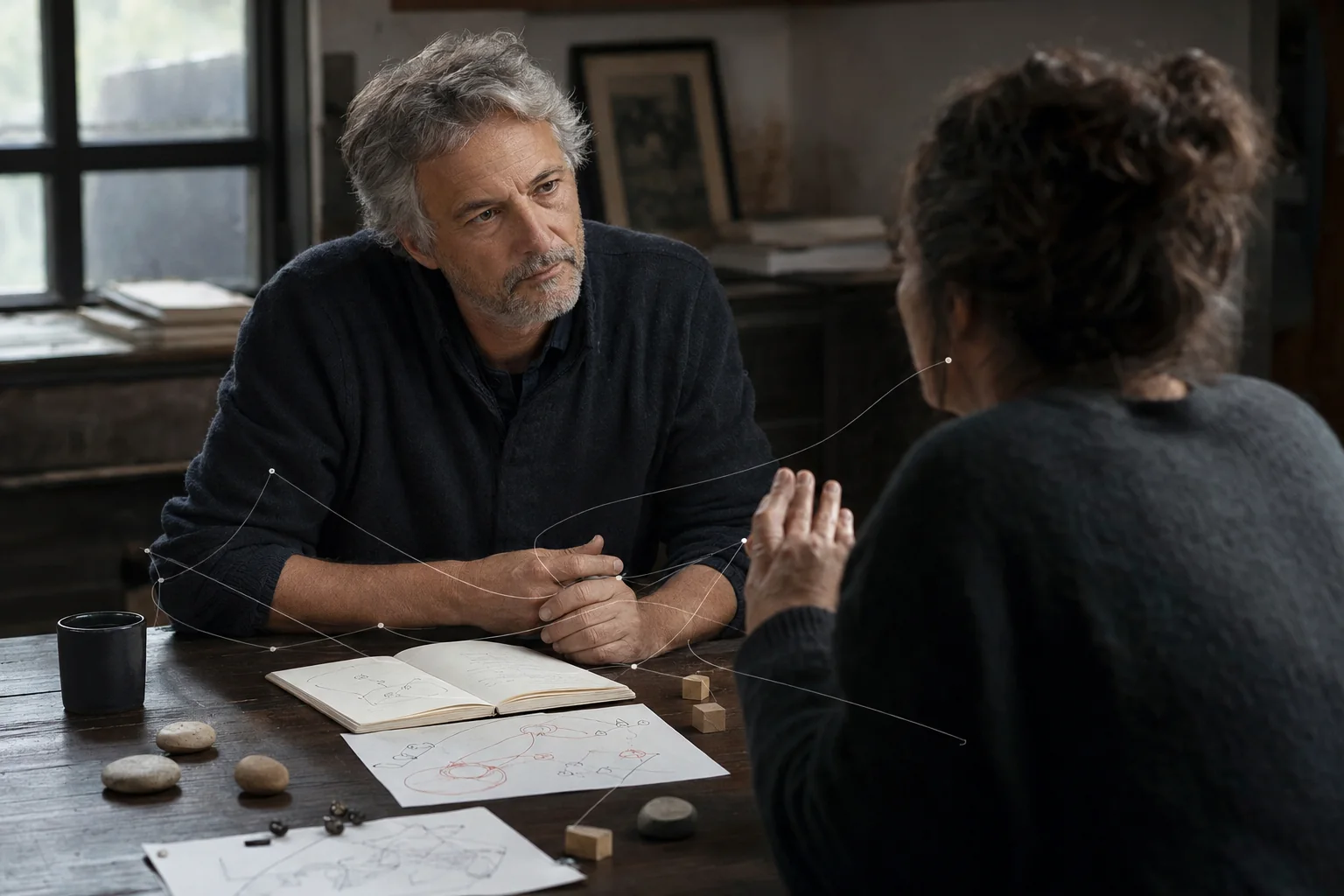
Understand what exists.
For situations that first need to be understood.
I examine the possibility space, the relations operating within it and the selections that shape what actually happens.
Findings, uncertainties, a System Map and practical next steps.
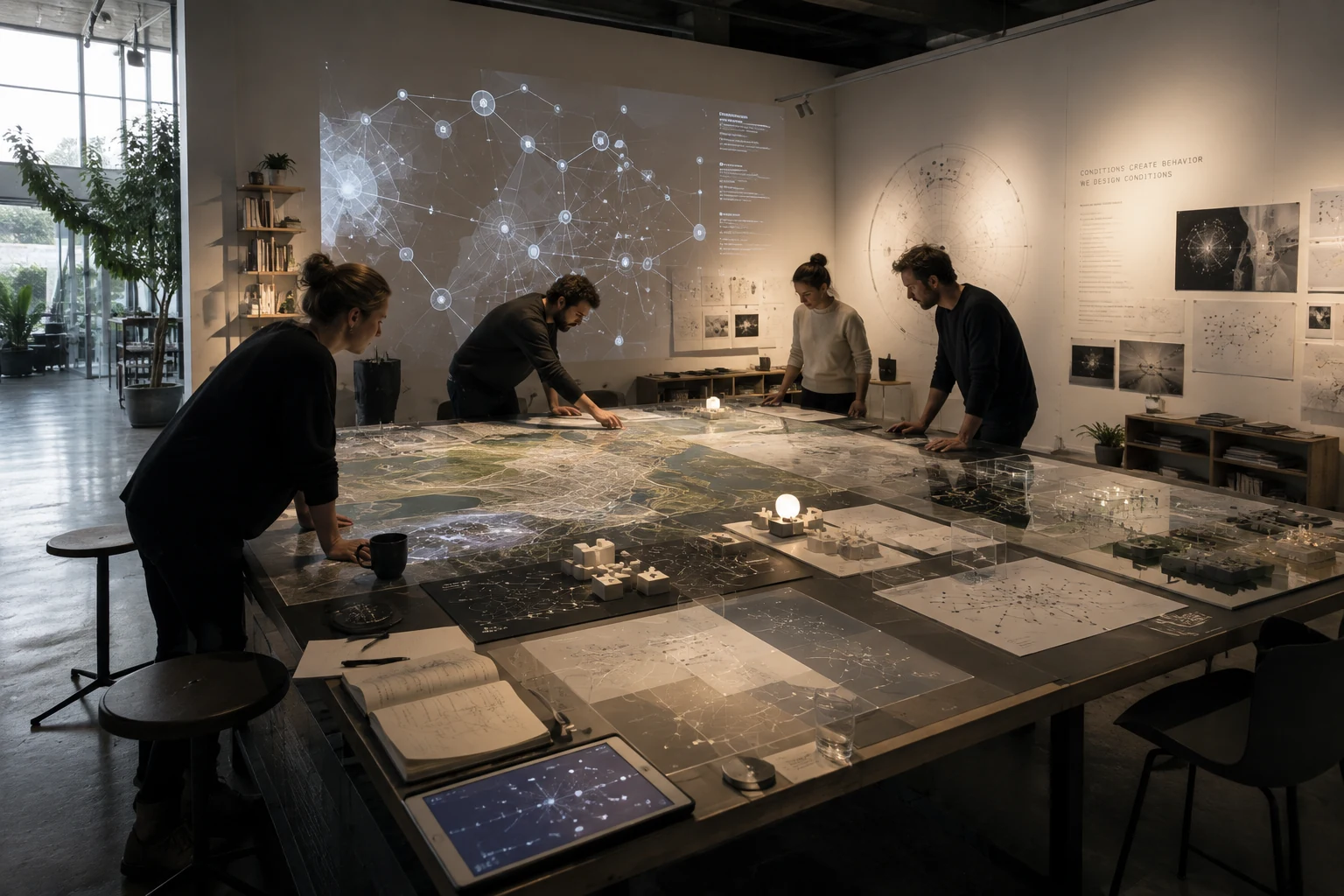
Develop a direction.
When understanding needs to become design.
Starting from an I·V·O analysis, I explore how changing conditions, relations or selection could produce a different situation.
This may concern a place, service, organisation, process, technology or other designed environment.
A documented design direction with principles, interventions and visual or spatial concepts where relevant.
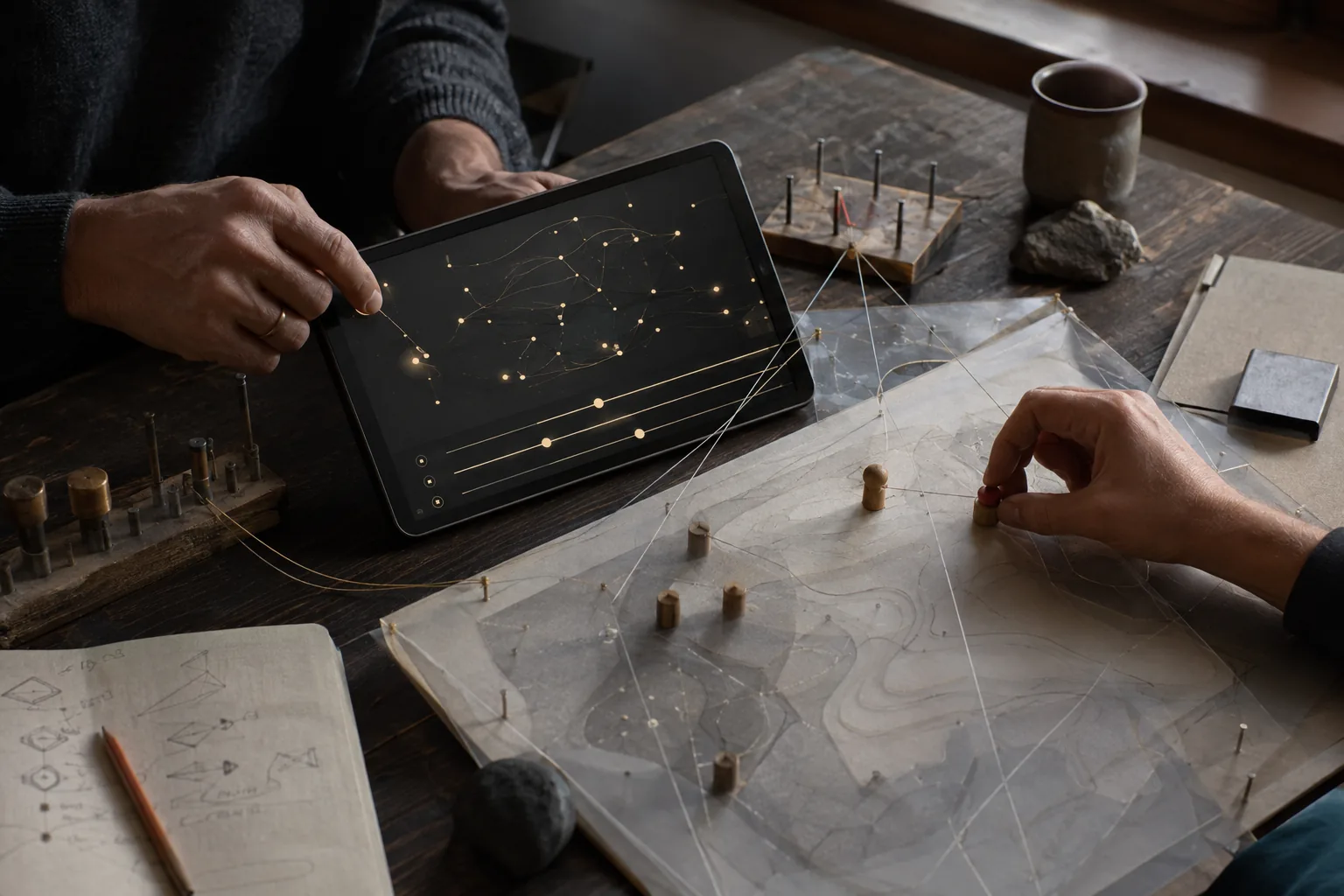
Make the system visible.
So it can become discussable.
I translate system dynamics into an interactive visual, simulation or exploratory environment that can be used to investigate patterns, assumptions and possible interventions.
Scope & price on request →
Don't need me to do the work?
Apply the principle in your own practice.
I·V·O can also be licensed for professional, organisational, commercial and technological use.
A licence allows you to apply the principle within your own practice or organisation under an agreed scope.
Explore licensing →
What are you working on?
Bring the situation.
Bring a place, organisation, technology, service, environment or difficult problem.
Tell me what is happening, what you are trying to change and why it matters. We can determine from there whether an Analysis, Design Study or another form of collaboration makes sense.
Start a project →